

Quality of movement, not simply completing poses
What you gain from a yoga practice is shaped by how you move, not by how far you go. Our focus is on alignment, awareness, and purposeful progression.
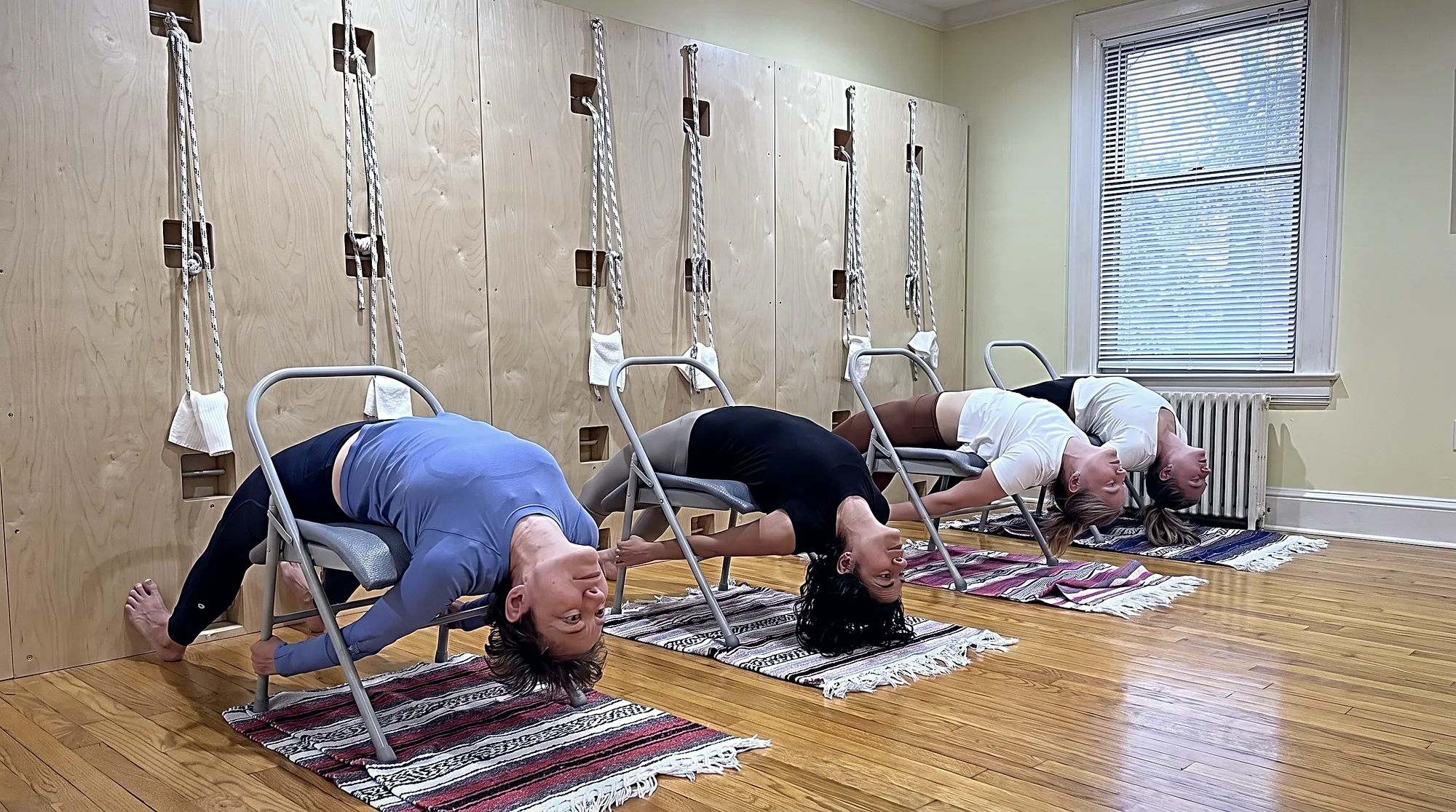
An Iyengar approach to yoga
Our approach emphasizes alignment, precision, awareness, and thoughtful progression. Practice with us in the studio or online, with both options included in your Yoga membership.
What better movement gives you back
The reason to practice is not the pose. It is what changes outside the room.
Strength you can use
Build strength through purposeful movement that supports everyday life, from standing and reaching to carrying and turning.
Mobility and posture
Improve mobility and posture to move more freely, stand taller, and feel more comfortable throughout your day.
Balance and confidence
Develop greater balance and stability for everyday movement. As steadiness improves, confidence often follows.
Healthy aging and quality of life
Build and maintain the strength, mobility, and confidence to keep doing the things that matter to you.
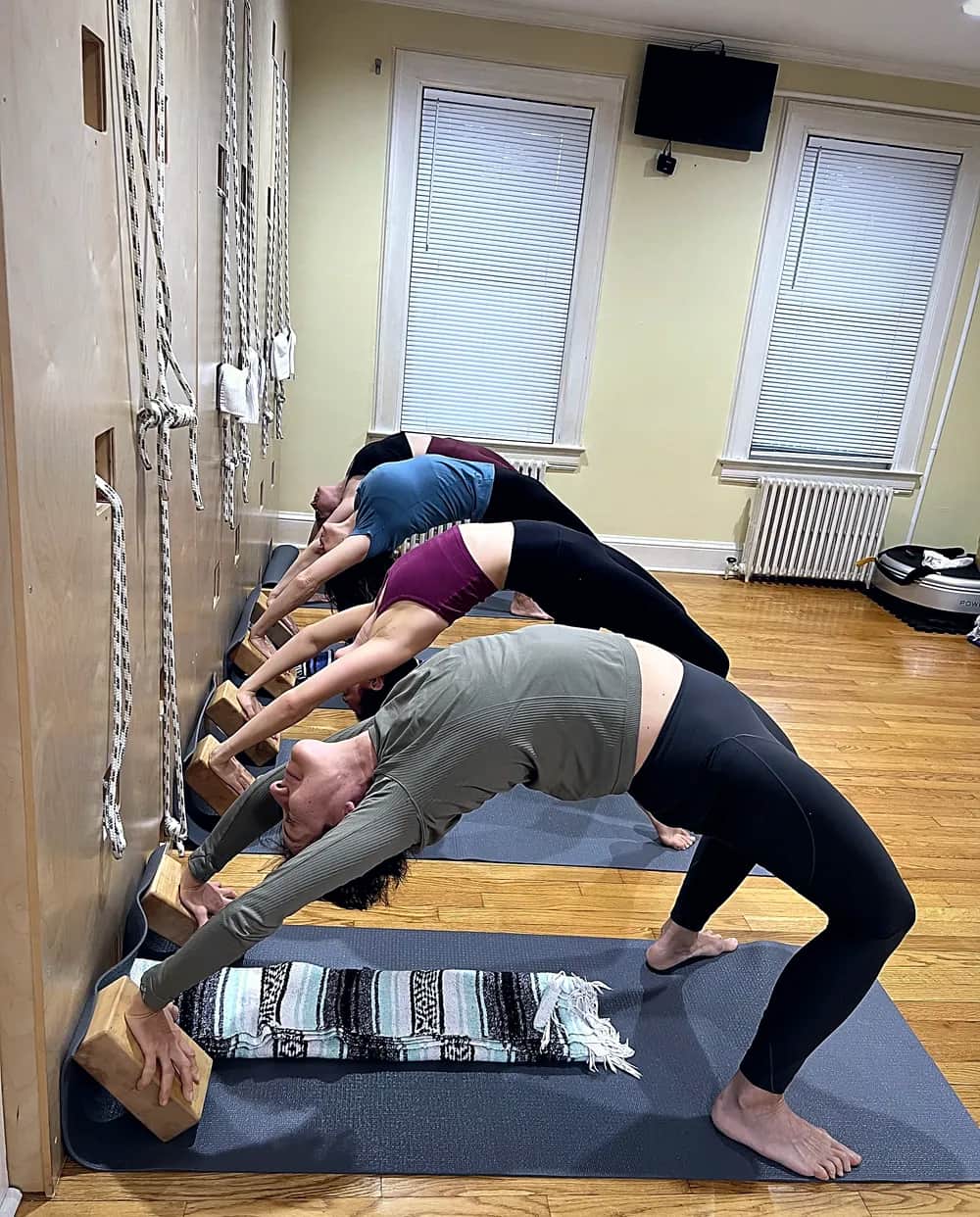
A cue that changes one thing is worth more than a cue that sounds inspiring.
How we teach
Exceptional instruction begins with understanding how each person moves. Our teaching emphasizes four principles that guide every practice.
Alignment
Where your joints are stacked, how weight travels through you, and what your body is actually being asked to do in a shape. Get this right and the pose starts working for you.
Precision
Small, specific instruction over general encouragement. A cue that changes one thing is worth more than a cue that sounds inspiring.
Stability
Control before range. We would rather you own a smaller shape than borrow a larger one.
Mindful progression
You advance when your movement says you are ready, not on a fixed timetable. Progress that holds is better than progress that resets.
Built for the body you have today
Our classes are designed so people with different experience levels, abilities, and starting points can practice together while receiving the instruction that is right for them.
Modifications are a normal part of teaching, and props are tools, not training wheels. Blocks, straps, blankets, chairs, and the yoga wall may be used to support alignment, deepen understanding, or appropriately challenge your practice.
Find the Yoga Practice That Works for You
Whether you’re new to yoga or continuing an established practice, we’ll help you find the class option that fits where you are today.
Questions people ask first
What does Iyengar yoga mean?
Our Iyengar approach emphasizes alignment, precision, awareness, and thoughtful progression. Teachers use observation, individual guidance, and props when appropriate to help students better understand how they move and develop their practice safely and confidently.
I have never done yoga before. Is there a beginner class?
You can begin in any class on the schedule. Instruction is layered so a first-time student and a longtime student can practice side by side, each working at the level that is right for them. If you would rather start one-on-one, we can arrange that instead.
I am not flexible. Can I still practice?
Yes. Flexibility is something a practice develops over time, not something you need before you start. Every shape has a version that fits the range you have right now.
What should I bring?
Comfortable clothing, water, and a mat if you own one. Mats and props are available at the studio if you do not.
Find a class that fits.
Explore the schedule and choose a class that works for you. If you’re unsure where to begin, we’re happy to help.
Find a class that fits
Look at the schedule, find a class that works for you, and take the next step in your practice.